A Product of Conservation Science Research
Gamblin Conservation Colors
Stable | Reversible | Versatile
Gamblin Conservation Colors, are the only inpainting color which is the product of a conservation science research project.
Complete Confidence
Why Choose Our Colors?
The five year research project begun in 1995, led by René de la Rie, Mark Leonard, Jill Whitten, and Robert Gamblin, with the support and input from conservators in Europe and America showed that these aldehyde resin based colors had great potential to be a significant advancement in retouching for the field of art conservation and restoration. The past 25 years of these colors being used around the world proves that to be correct.
Stable, Reversible, and Versatile mean that they are suitable for use with a wide array of painting styles and techniques. Their innovative low molecular weight resin binder also makes Gamblin Conservation Colors safer to use for the conservator.
Conservation colors made from a low molecular weight resin binder have better optical properties and better handling properties than paints based on polymeric resin.
Stable
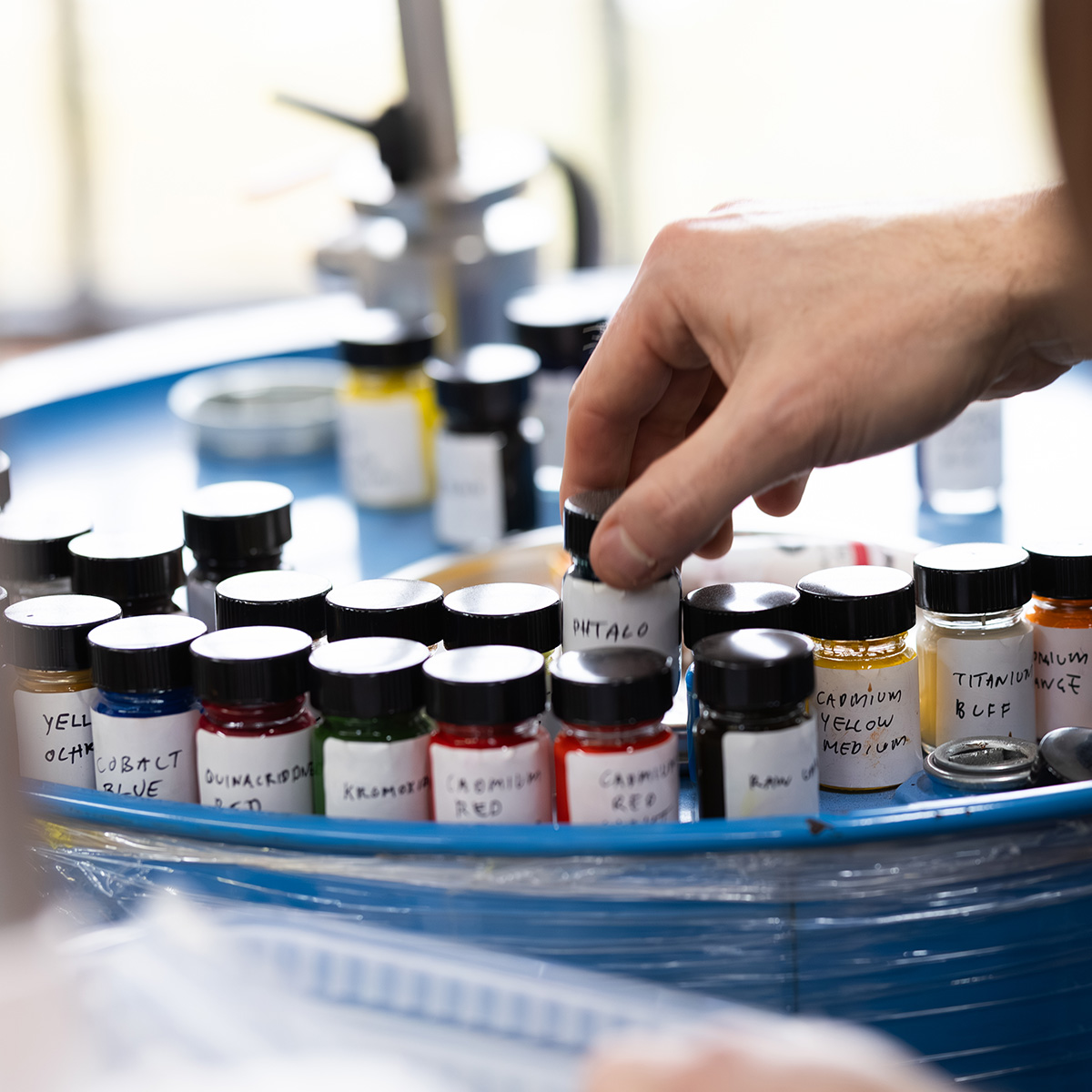
The colors are made with a stable aldehyde resin binder: Laropal® A-81, a product of BASF Group.
Drawdowns have been aged 3000 hours in a weatherometer (equal to approximately 62 years of museum light exposure).
The samples retained their solubility in mild solvents, showing that the resin is stable upon aging. Only pigments of highest lightfastness are used (including modern substitutes for Alizarin Crimson, Indian Yellow, Sap Green, Van Dyke Brown, and Brown Madder).
Reversible
This stability of the aged resin means that treatments remain reversible in similar solvents as when originally painted.
Versatile
Gamblin Conservation Colors have excellent working properties.
Robert Gamblin has applied his decades long experience of making artist’s colors to these colors so that their working properties facilitate your work of retouching. The high refractive index of the resin leads to colors as saturated as aged oil colors. The palette of 50 colors also facilitates color mixing.
Safety
Low solvent requirements – Because the aldehyde resin is soluble in solvents of low polarity, you can greatly lower your exposure to strong solvents while retouching paintings. If at any time in the future it is necessary to remove the color it will redissolve in mild solvents, to help protect the original work.
Meet Robert Gamblin
Robert Gamblin founded Gamblin Artists Colors in 1980 to bring a 400 yr old painting medium into the present by replacing lead and turpentine with stable new materials and by educating a generation of American artists about painting materials. Being part of the team that developed the color that became Gamblin Conservation Colors is one of his proudest accomplishments.
Fancy listening to the full conversation?
(External link – You are leaving our website.)